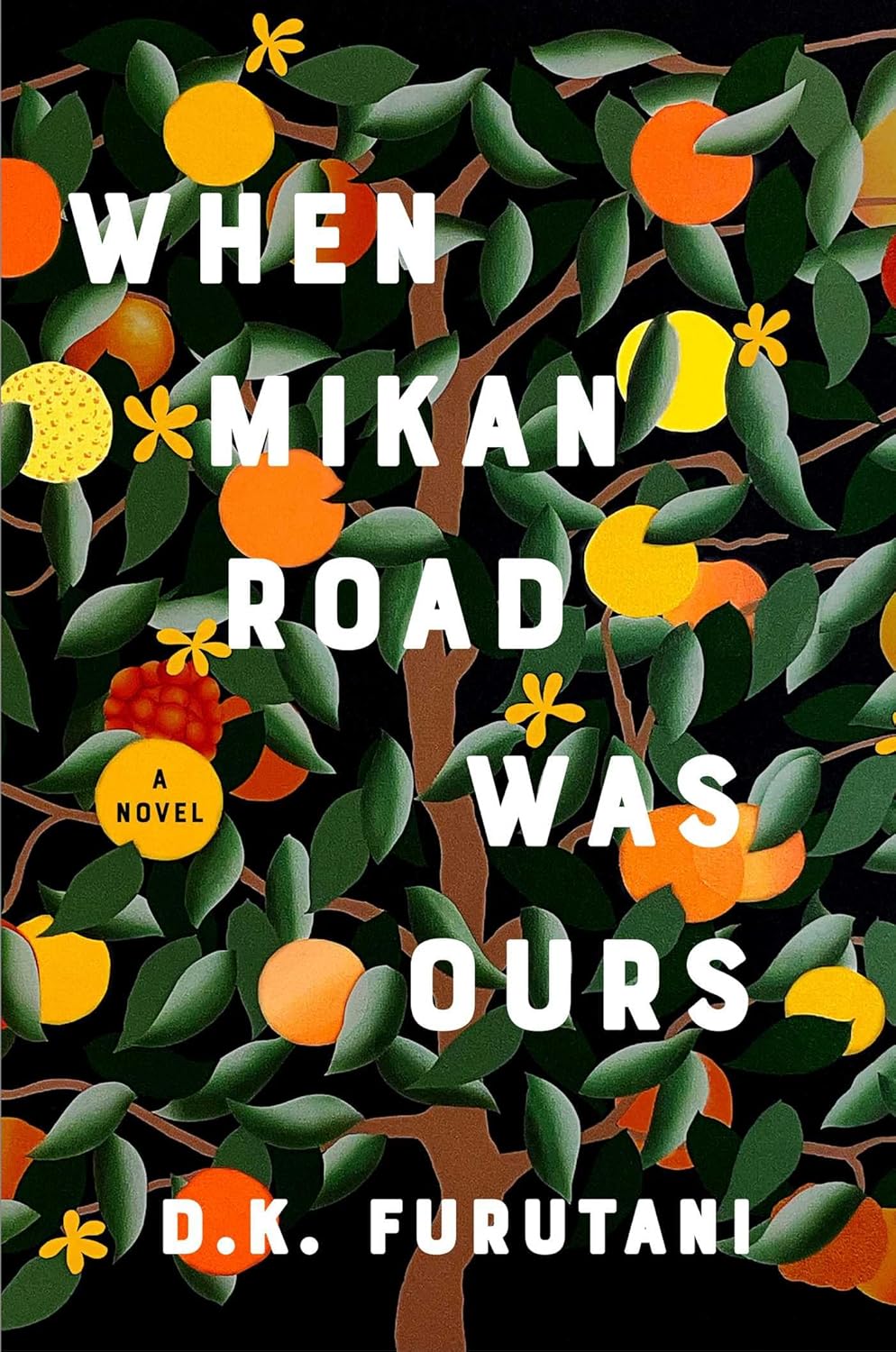
INFORMATION ABOUT THIS BOOK
Publisher : Atria Books
Publication date : July 2026
Format: Hardcover, audiobook, and ebook
Print length : 320 pages
Genre: Historical Fiction
MY PERSONAL OPINION OF “WHEN MIKAN ROAD WAS OURS”
I got this book as an ARC from NetGalley and read it back in April. I was intrigued by the premise of the book, as it narrates the actions taken against Japanese Americans after the attack on Pearl Harbor. I know very little about this part of history. It is a transgenerational story, which is really my kind of reading. It is usual to see transgenerational story lines based on women; this one is based on the men of the family.
The story is told by Murano, a high school teacher who recently lost his father and battled cancer, who is invited to attend the funeral of his great-uncle Ben. Murano feels alienated by his father’s side of the family, having very little to no contact with them during his life. When attending the funeral, he is greeted by his cousin Kaiya and learns that his great-uncle left him his memoirs and a plot of land in Japan.
Through the memoir, his cousin, and his auntie, Murano learns about his Japanese family heritage. He learns about the family farm land that they had in California, about the lost of the farm when the Pearl Harbor and subsequent war happened, and the relocation of the family to the camps. He learns about how the family split, how his grandfather returned to Japan, and about the upbringing of his own father.
It is a moving story, fast-paced, full of hard work, courage, fear, abandon, loss, and family. It read like poetry, so fluidly and full of sentiment. Murano’s own perception of his life, his relationship with his dad, and with his family is explored, and to see him embracing all that he has learned was wonderful.
PREMISE OF THE BOOK AS FOUND IN AMAZON / GOODREADS:
Amid a sweltering Los Angeles heat wave, Murano, a reclusive high school English teacher, is muddling through life. Reeling from his father’s sudden death as well as his own recent cancer diagnosis, he passes time hazily grading papers and appeasing disgruntled parents while counting down each day until summer vacation.
The monotony breaks when he inherits his great-uncle Benjiro’s unpublished memoir. What Murano expects to be a grim reminder of his position as the half-white son of the family’s outcast instead whisks him away to 1930s California, to a time when the Murano family was inseparable, relishing life together on their bucolic farm. As the memoir introduces him to relatives he never knew existed and unearths hidden complexities of the past, Murano is pulled close to the Japanese identity he’s dismissed all of his life. Faced with the reality of his family’s dissolution, Murano becomes determined to understand its breaking point following their incarceration in American concentration camps during World War II, no matter what hidden truths he might uncover about his ancestors or himself.
Lovingly crafted with poignant and profound attention to historical detail, When Mikan Road Was Ours is a rich meditation on belonging that seamlessly blends the intricacies of heritage, the resilience of family bonds, and the struggle to reconcile a past filled with both heartache and hope.
MY RATING: 5.0
ABOUT THE AUTHOR
Born and raised in Southern California, D.K. Furutani is the author of When Mikan Road Was Ours, winner of Simon & Schuster’s third-annual Books Like Us contest. His work has received support from the Periplus Collective and the Tin House workshops. He resides in Los Angeles with his wife and three cats.
Bibliography:
- When Mikan Road was Ours is his debut novel




 Welcome To Your Friendly Bookshelf
Leave a comment